
The operating layer for the full Shopify inventory curve
InventoryIntel helps Shopify teams recover value from stagnant and slow-moving stock on the cold end, and protect winners before they stock out on the hot end. Continuous monitoring and scheduled policy evaluation keep recovery moving, with deterministic runway logic, guardrails and a full audit trail.
- ✓Always-on by design - monitoring and policy evaluation keep moving without a login
- ✓See runway per SKU before stock turns stagnant or discounts erode value
- ✓Protect winners before they stock out - flag fast-movers early with lost-revenue context
- ✓Set policy once and keep approval in the loop or automate, with a full audit trail
- ✓Connect storefront signals to the backend - badges and tags stay in step with changing conditions
InventoryIntel evaluates route fit, logistics costs and policy rules before acting, so recovery decisions stay tied to what you actually keep.
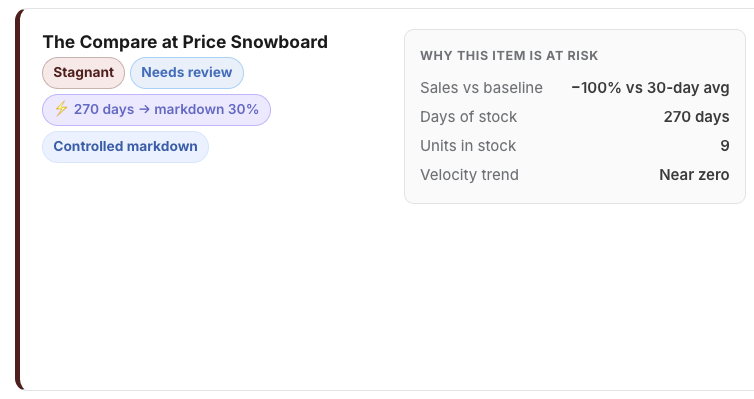
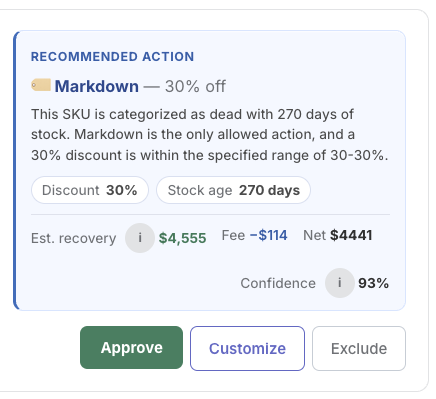
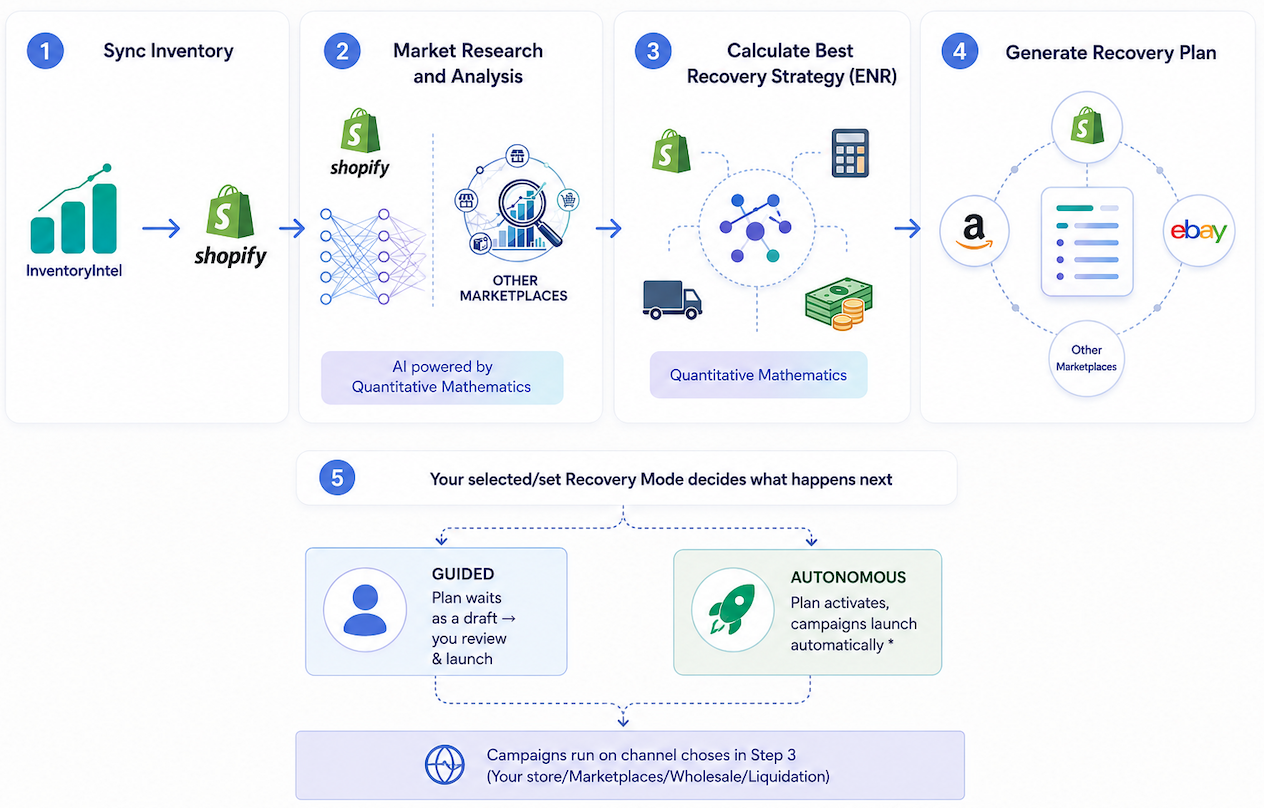
A workflow buyers can see, validate and trust
This is the operating model behind InventoryIntel: sync the catalogue, analyze market context, calculate the best recovery strategy, generate the plan and then execute in guided or autonomous mode.
Always on, not babysat
InventoryIntel runs continuously, checks policy on schedule, and records every action in an audit trail.
Continuous monitoring
Scheduled policy execution
Operator visibility
Audit trail
It's not just dead stock that costs you — your bestsellers do too
InventoryIntel works both ends of the curve: clear stagnant stock before it erodes margin, and flag winners before they run dry.
“About to sell out” lane
“Just restocked” lane
A dollar figure on doing nothing
A smart to-do list, not an autopilot
Beyond text tags: visual storefront signals that surface automatically
Text tags stay behind the scenes. Automated Product Badging goes further and pushes visual badges straight to your live storefront — Markdown, Sale, Low Stock, Sustainability and more — so the merchandised storefront shows the right signal at the right time, with no theme edits.
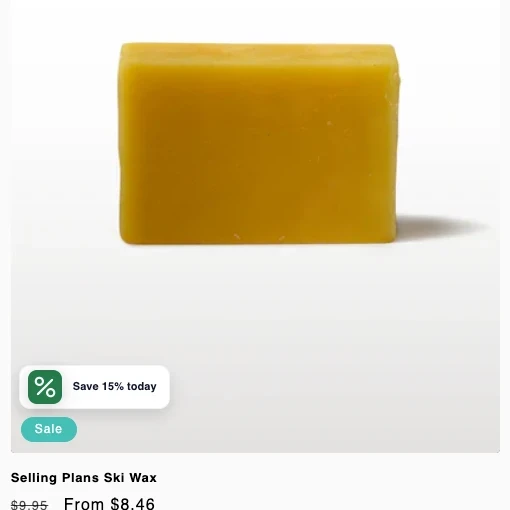
A Shopify storefront badge example: the markdown badge updates from the live recovery rule, and the same framework can power additional signals as your policies expand.
Markdown, Low Stock and Sustainability are the examples we are showing here. The system is broader than that, so additional badge types can be added as merchandising rules expand.

A policy-approved price cut surfaces on the product page and collection grid — “Save 20% today, priced to move while stock lasts” — so shoppers see the deal without anyone editing the theme.

Turns scarcity into conversion. The moment available stock falls under the level you set, a low-stock badge appears to nudge urgency — then clears itself once stock recovers.

Products you mark as sustainable automatically surface a sustainability badge, so eco credentials show on the storefront without manual merchandising.
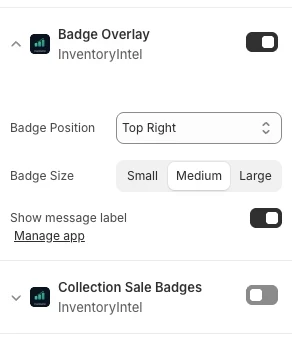
Badges install as a Shopify theme app embed, so operators decide where they appear, how big they are, and whether the message label shows — configured once and applied across the storefront.
What justifies a premium is reliability
Anyone can discount stock. InventoryIntel earns enterprise pricing through deterministic logic, governance and breadth of recovery.
Deterministic runway and risk logic
Policy-driven automation with guardrails
Auditability and approval control
Richer recovery actions than discounting
Multi-channel recovery paths
Wholesale, marketplace and fallback routing
Storefront signals and Automated Product Badging
Operational reliability and audit trail
Stop or unwind recovery cleanly — and keep the record
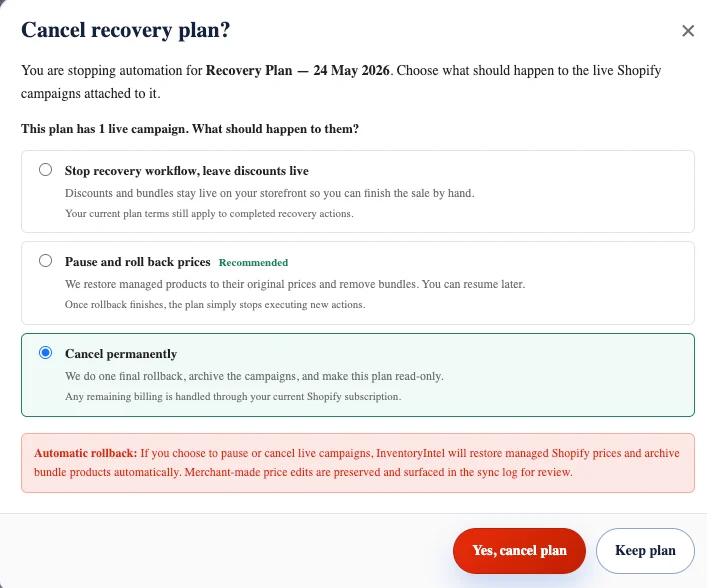
When you pause or cancel a recovery plan, InventoryIntel can restore managed Shopify prices and archive bundle products while keeping merchant edits in the sync log.
Set thresholds once. Launch campaigns automatically or keep approval in the loop.
InventoryIntel syncs, classifies, checks policy rules and then either queues work for approval or launches it automatically.
1. Sync inventory and sales history
2. Classify stock by runway and risk
3. Apply policies and protection rules
Operator teams can move from review-first workflows into policy-driven automation without losing control.
Backend decisions become storefront actions your customers can actually see
InventoryIntel connects policy decisions to merchandising outcomes: tags, badges, exports and attribution.
Auto-tagging and Automated Product Badging
Alerts, digests and monitoring
See the real cash trapped in slow stock
Protected inventory controls
Net-positive routing decisions
Transparent attribution
90-day velocity trend at a glance
Whole-store demand mix by channel and geography
Enterprise access control, without adding another identity system
For teams that already use Microsoft Entra ID, Okta, or another SCIM-capable identity system, InventoryIntel can keep Shopify as the sign-in layer while enterprise access is governed in your directory. That gives security and operations teams centralized role control, cleaner offboarding, and a smaller audit burden.
Directory-backed roles
Fast offboarding
Least-privilege access
Audit-friendly governance
A shared inventory language your team can act on
InventoryIntel gives finance, merchandising and operations a clear status system with runway context, urgency classification and a shared language for what needs attention now.
Healthy
Slowing
Critical
Stagnant
See how the system works before you install
Evaluation-stage buyers need proof, not abstraction. InventoryIntel exposes the screens and operational surfaces that matter most before a merchant commits.
Inventory health and recovery queue
Policies, controls and protected inventory
Storefront campaigns and signals
Reports, exports and trust
Inventory recovery that scales with you.
Choose a zero-upfront performance model or move into a fixed-cost partnership built for larger catalogues, tighter governance and dedicated operating support.
No monthly subscription. Unlimited SKUs. Pay only when measurable recovery is created across attributed campaigns and routes. Self-serve install, billed through Shopify.
Install on ShopifyA custom fixed monthly fee with no recovery commission, for high-volume Shopify brands that prefer predictable monthly OPEX. Includes a 14-day evaluation trial and is billed through Shopify.
Request Alliance QuoteSee the recovery path before the margin disappears.
Install on Shopify to see at-risk inventory, route-aware recovery plans and governance controls in one workflow. Prefer a walkthrough first? Book a demo and we will map runway, policies, routes and recovery controls against your catalogue.